
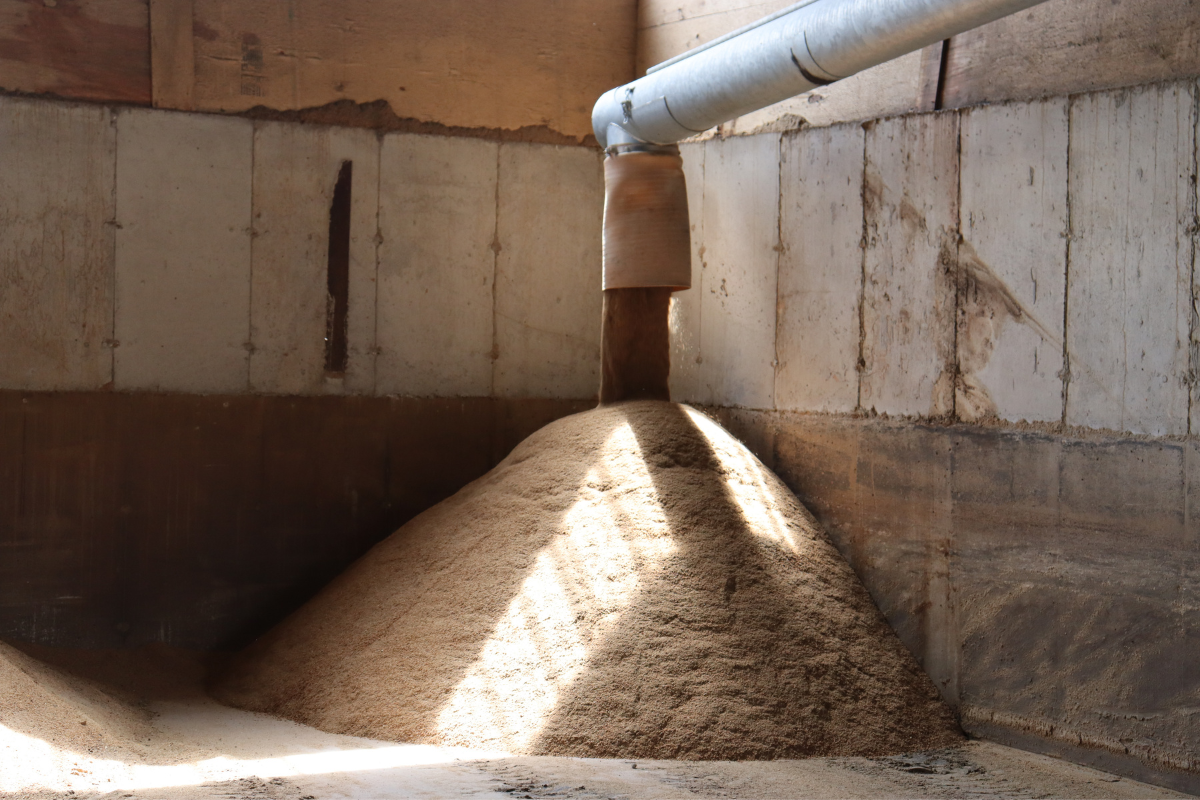
Including distillers grains in your dairy cattle’s mixed ration can provide a cost-effective source of protein, energy, fiber, fat, vitamins, and minerals. Ethanol production removes most starch from corn, leaving the highly concentrated nutrients your herd can benefit from.
When sourced and balanced correctly, distillers grains can replace portions of soybean meal and corn. They support milk production and can improve the cost-effectiveness of feed. Read on to learn what distillers’ grains are, which type to use, and what useful benefits they can offer to your dairy cattle feed and farm as a whole.
What Are Distillers Grains?
Distillers grains are the co-products of grain-based ethanol production. Most of the ethanol industry in North America uses corn, but distillers grains from wheat, sorghum, and other grains can be incorporated into dairy and beef cattle diets.
Corn is ground and mixed with water to convert starch to fermentable sugars using enzymes. Next, yeast is added to convert those sugars into ethanol. What remains is low-starch corn or wheat material, also known as stillage.
The stillage is separated into coarse wet grains and liquid thin stillage. After concentrating the liquid thin stillage into syrup, it’s added back to the grains and dried. This produces dried distiller grains with solubles (DDGS). While starch is lost to ethanol, the protein, fat, fiber, and minerals remain for use in cattle feed formulations.
The Difference Between Wet and Dry Distillers
The two most common forms of distiller grains are the wet distiller grains with solubles (WDGS) and dried distiller grains with solubles (DDGS). They come from the same source and can have similar compositions on a dry-matter basis. The primary difference is their moisture content, which can lead to operational and economic differences.
| Distillers Grains | Dry Matter | Moisture | Primary Advantages | Primary Limitations |
|---|---|---|---|---|
| Wet distillers grains with solubles (WDGS) | 25–35% | 65–75% | Lower processing cost and adds moisture to dry TMRs. | Rapid spoilage, frequent deliveries, and costly transport. |
| Dried distillers grains with solubles (DDGS) | 88–92% | 8–12% | Easier transport, storage, and inventory management. | Higher cost due to drying. |
WDGS is often more economical for farms if they are near an ethanol plant. Since it has a shelf life of just under a week in warm weather, it requires frequent, reliable deliveries. DDGS costs more to produce due to drying, but its lower moisture content makes it more freight-efficient and easier to store for longer periods.
The Economic Benefit of Dried Distillers Grains
A USDA report estimated that 1 metric ton of distiller grains can replace an average of 1.22 metric tons of feed consisting of corn and soybean meal across the U.S. feed complex. Although the report aggregates the market estimate, it still illustrates a massive difference that can translate into reduced feed costs, transportation, and handling costs.
However, DDGS shouldn’t be evaluated solely on its cost per pound or crude protein. It’s a complex feed ingredient that supplies energy, protein, and fiber. And it can replace or supplement soybean meal, corn, supplemental fat, and nonforage fiber. As an ingredient in the overall feed mix, DDGS can help lower ration costs while maintaining or improving milk production.
Dried Distillers Grains Nutritional Profile
DDGS are nutrient-dense. While their nutritional profiles can vary by source, they generally fall within a similar range. Let’s compare DDGS with corn to better demonstrate just how nutritionally dense dried distillers grains are.
| DDGS vs. Corn Dry Matter Comparison | ||
|---|---|---|
| Corn distillers grains with solubles (DDGS) | Corn grain | |
| Crude protein | 26–35% | 8.5–9.5% |
| Crude fat | 5–13% * | 3.2–4.2% |
| Neutral detergent fiber (NDF) | 29–44% | 9–11% |
| Starch | 1–7% | 66–72% |
* Crude fat range accounts for reduced-oil and conventional DDGS sources.
DDGS are also an excellent source of rumen-undegradable protein, with up to 55% of crude protein, according to the Journal of Dairy Science. In addition, its low starch content may reduce the rations’ starch load and help manage the risk of rumen acidosis. However, it cannot serve as a complete replacement for long forage fiber to stimulate cud chewing and rumination, as DDGS fiber consists of small particles.
DDGS is relatively low in lysine, and overheating during drying can reduce protein and fiber digestibility, as noted by Purdue University. Likewise, using DDGS as the dominant protein source can limit the diet’s rumen-degradable nitrogen for microbial protein synthesis.
Farms should treat DDGS as a protein-and-energy ingredient that requires careful balancing from your nutritionist. It’s not a crude-protein commodity. The ration as a whole must meet the right amino acid, fiber, mineral, and rumen function needs which requires using DDGS as a context-specific ingredient.
Practical Inclusion Rate
Research and general guidance support a practical DDGS target of about 10–20% of the ration dry matter. Some studies have successfully fed 30% DDGS, but others have reported lower dry matter intake or reduced milk-fat and protein performance at higher rates. The optimal amount will depend on your herd, your nutritionist’s recommendation, DDGS source, forage program, production stage, and the total mixed ration.
Star Blend’s commodity team works with beef and dairy producers and their nutritionists to incorporate DDGS into custom feeds and on farm commodity delivery. By accounting for your goals and your nutritionist’s guidance, we can help you achieve feed-cost savings without sacrificing palatability, consistency, or performance.
Considerations and Best Practices
While distillers grains offer many economic benefits, farms must consider the following before using them in feed:
- DDGS aren’t a forage fiber replacer. Since the fiber in DDGS is crushed into tiny pieces, it accounts for less than 15% of the physically effective fiber.
- The composition can vary. Make sure you source DDGS from a consistent quality source.
- Monitor total dietary sulfur. DDGS sulfur content can vary by source. It can contain up to 0.60–0.70% or more of dry matter, while the traditional tolerance zone of the total ration for cows is 0.40%. DDGS must be carefully managed to avoid sulfur toxicity.
- Consider the mineral content. DDGS contains high phosphorus but low calcium. Balancing the two requires careful consideration of the entire feed formula.
- Quality control is critical. Ethanol production doesn’t destroy mycotoxins if the grain is contaminated. Mycotoxins can be highly concentrated in DDGS (up to 3 times more than in the raw grain). Star Blends follows a documented HACCP-based program and appropriate sourcing, testing, traceability, and safety controls to manage risks with DDGS and other feed ingredients.
Trust Star Blends For Custom Feed Manufacturing and Commodities
Distillers grains for cattle can be a smart addition to your ration, but only when they’re sourced, tested, and mixed with care. Star Blends works with you and your nutritionists to formulate custom dairy rations that make full use of cost-effective ingredients like DDGS without compromising quality or consistency. Connect with our team if you think DDGS are a good option for your operation.