
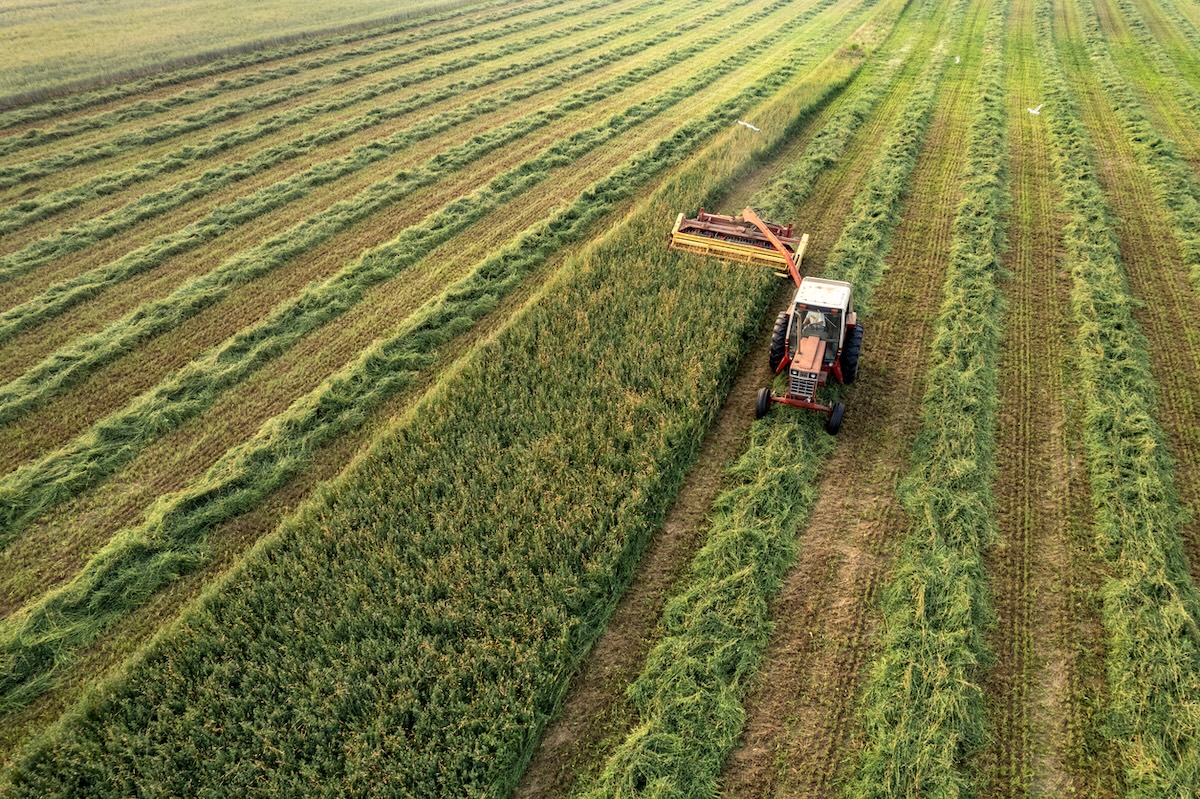
Traditionally, first-cut hay produces the highest yield, making first-cut alfalfa one of the most economically important forage harvests of the year. However, that also means there’s a greater risk of quality loss if harvest timing is delayed. Second-cut hay, while typically lower yielding, can offer excellent nutritional value for dairy cattle thanks to its higher digestibility and protein content.
Both first- and second-cut hay play important roles in dairy rations, but each offers distinct strengths and challenges. Understanding how the cuts differ can help producers better balance forage quality, milk production goals, and overall dairy cattle feed efficiency.
First-Cut vs. Second-Cut Hay: Fundamental Differences
First-cut hay, especially alfalfa, typically produces higher tonnage than later cuttings. However, it tends to contain more fiber, lower protein levels, and reduced digestibility than second-cut hay.
Second-cut hay grows during a shorter regrowth period, which usually results in leafier plants with less stem content. As a result, second-cut hay often has higher crude protein levels and improved digestibility.
That said, these differences are general trends rather than fixed rules. Weather, maturity at harvest, and growing conditions can all significantly impact forage quality, making forage testing essential when balancing dairy rations.
Is First Cutting Hay Better?
First cutting hay isn’t necessarily better than second cutting hay, and vice versa. Farmers benefit from first cutting hay as a structural, dairy cow fiber source when harvested at the correct time. And the second cut can provide higher digestibility and energy.
The best option depends largely on the cow’s production stage and nutritional needs. Lactating, growing, and gestating cows generally benefit more from second-cut hay because of its higher energy content and lower stem concentration. Dry cows and other non-producing animals on maintenance diets may benefit more from first-cut alfalfa due to its higher fiber content.
See the table below for a full rule of thumb comparison:
First vs. Second Cut Hay Full Comparison |
||
| First Cutting Hay | Second Cutting Hay | |
| Yield amount | Higher | Lower |
| Fiber content | Higher | Lower |
| Protein content | Lower | Higher |
| Texture | Coarser | Finer / leafier |
| Digestibility | Lower | Higher |
| Energy | Lower | Higher |
| Weather risk | Higher | Lower |
| Concentrate needs | Higher | Lower |
| Best fit | Heifers, dry cows, late-lactation cows; high cows only if harvested early | Early-lactation and high-producing cows |
| Primary concern | Must be harvested in time. Otherwise, it gets stemmy and loses effectiveness. | Lower yield tonnage. Still must be tested. |
How First and Second Cut Affect Milk Production
When harvested at the correct maturity, first-cut hay provides the physically effective fiber needed to support rumination, cud chewing, and milk fat production. Adequate fiber is also important for reducing the risk of rumen acidosis.
Second-cut hay often offers greater digestibility and higher energy density, allowing cows to consume more nutrients per feeding. This can support increased milk production, making second-cut hay a strong fit for high-producing dairy cows.
Forage Quality vs. Quantity and Finding the Sweet Spot
A well-timed first cut can outperform a poorly timed second cut, which is why harvest timing and forage analysis matter more than cut number alone.
Because the first cut comes immediately after winter dormancy, plants are typically taller, thicker, and stemmier than later cuttings. As alfalfa matures, several important plant changes occur:
- Stem fraction increases
- Lignin accumulates
- NDF (Neutral Detergent Fiber) and ADF (Acid Detergent Fiber) rise
- Digestibility falls
- Usually followed by a drop in crude protein.
Lower digestibility and reduced energy availability can directly limit milk production. As alfalfa overmatures, the forage becomes less nutritionally valuable. Mature first cutting hay can also reduce rumen passage rate and limit dry matter intake (DMI), decreasing the amount of energy available for production and growth
Plants shouldn’t be too mature or too immature before any cut. However, first cutting hay carries a greater risk of missing the optimal harvest window because spring alfalfa generally has a narrower timing window than later cuttings, as noted by the University of Wisconsin-Madison.
Harvesting too early can reduce total yield and limit the amount of effective fiber available in the forage. Waiting too long may increase yield tonnage, but excessive fiber accumulation lowers digestibility and reduces the forage’s economic value.
Research on forage maturity has shown approximately a 15% drop in dry matter digestibility when comparing early-cut and late-cut forage. For dairy operations, that decline can have a significant economic impact due to reduced feed efficiency and milk production potential.
Determining the Right Cut Time
Knowing when to make the first cutting is essential for maximizing both yield and forage quality. The goal is to achieve the highest possible yield while maintaining enough effective fiber and digestibility to support dairy cow performance. Too little fiber can reduce rumination, while excessive fiber limits digestibility and energy availability.
According to Iowa State University, maximum dry matter alfalfa yield is typically achieved by harvesting the first cutting near full bloom. However, producers still need to balance yield potential with forage quality goals.
Some commonly used methods to determine the right cutting time are:
- Growing Degree Days (GDD): A measure of heat units of plant exposure above its base temperature. Michigan State University recommends a target value of 680–750 GDD.
- Plant height: A commonly used indicator of plant maturity.
- Predictive Equations for Alfalfa Quality (PEAQ): Equations that rely on plant height to estimate feed quality. Usually used with a PEAQ stick for quick field measurements. PEAQ helps determine the relative feed value (RFV), relative feed quality (RFQ), and neutral detergent fiber (NDF).
Forage Testing Matters More Than Cut Number
While first and second cut hay often follow certain quality trends, actual forage value depends on far more than the cut number alone. Several factors can significantly influence nutritional quality, including:
- Specific harvest timing
- Seasonal weather conditions
- Geography and growing conditions
- Plant maturity
- Land fertility and fertilizer use
Because of these variables, forage testing is critical for accurately evaluating hay quality and properly balancing dairy rations. Through testing, farmers can adjust feed and fill nutritional gaps to maximize milk production, herd health, and weight gain.
Testing also plays an important role in feed inventory planning. Understanding the true nutritional value of both first and second cut alfalfa or grass hay allows producers to use each cutting more strategically and potentially reduce concentrate feed costs.
Work With a Custom Feed Manufacturer To Balance Your Rations
The quality of your first cutting hay directly impacts how the rest of your ration needs to perform. Star Blends works with dairy producers and their livestock nutritionists to develop custom feed solutions that complement your forage analysis and production goals. If you’re evaluating this year’s hay crop, contact Star Blends to ensure your feed program is balanced for optimal performance.